Blog

How Feet May Show Early Warning Signs of Diabetes 

According to The National Diabetes Statistics Report of 2020, over 34 million Americans over the age of 18 had diabetes in 2018. However, 7.3 million of those people were either not aware they had diabetes or did not report it. It is important to be properly diagnosed and treated for diabetes promptly as this chronic disorder causes elevated blood sugar levels which can lead to several negative health conditions throughout the body—including diabetic foot problems due to poor circulation and nerve damage. Your feet can often present warning signs of diabetes such as numbness in your toes or feet, tingling, burning, swelling, lack of feeling, or change of skin color in your feet, open sores that won’t heal, ankle pain, and more. If you notice any of these symptoms or are experiencing any pain in your feet or ankles, it is suggested that you contact a podiatrist for a thorough examination and proper diagnosis.

Diabetic foot care is important in preventing foot ailments such as ulcers. If you are suffering from diabetes or have any other concerns about your feet, contact one of our podiatrists from Advanced Foot & Ankle Medical Center . Our doctors can provide the care you need to keep you pain-free and on your feet.

Diabetic Foot Care

Diabetes affects millions of people every year. The condition can damage blood vessels in many parts of the body, especially the feet. Because of this, taking care of your feet is essential if you have diabetes, and having a podiatrist help monitor your foot health is highly recommended.

The Importance of Caring for Your Feet

  • Routinely inspect your feet for bruises or sores.
  • Wear socks that fit your feet comfortably.
  • Wear comfortable shoes that provide adequate support.

Patients with diabetes should have their doctor monitor their blood levels, as blood sugar levels play such a huge role in diabetic care. Monitoring these levels on a regular basis is highly advised.

It is always best to inform your healthcare professional of any concerns you may have regarding your feet, especially for diabetic patients. Early treatment and routine foot examinations are keys to maintaining proper health, especially because severe complications can arise if proper treatment is not applied.

If you have any questions please feel free to contact our office located in Thousand Oaks, CA . We offer the newest diagnostic and treatment technologies for all your foot and ankle needs.


Read more about Diabetic Foot Care

How Orthotics Can Help Prevent Running Injuries

Runners’ feet can take a beating striking the ground roughly 800 times for every mile they run. Even the best running shoe may not offer the support and cushioning necessary to avoid pain or overuse injuries to the arches and heels such as plantar fasciitis, Achilles tendonitis, sesamoiditis, stress fractures, metatarsalgia, and more. The lack of proper foundational support leading to these conditions can also negatively affect knees, hips, and the lower back. Custom orthotics may prevent and also treat overuse injuries and can even correct imbalances in a runner’s stride which can lead to foot pain and other issues. If you are a runner, consider contacting a podiatrist who can examine your feet, create custom orthotics to support your individual foot structure and address your specific foot condition.

Sports related foot and ankle injuries require proper treatment before players can go back to their regular routines. For more information, contact one of our podiatrists of Advanced Foot & Ankle Medical Center . Our doctors can provide the care you need to keep you pain-free and on your feet.

Sports Related Foot and Ankle Injuries

Foot and ankle injuries are a common occurrence when it comes to athletes of any sport. While many athletes dismiss the initial aches and pains, the truth is that ignoring potential foot and ankle injuries can lead to serious problems. As athletes continue to place pressure and strain the area further, a mild injury can turn into something as serious as a rupture and may lead to a permanent disability. There are many factors that contribute to sports related foot and ankle injuries, which include failure to warm up properly, not providing support or wearing bad footwear. Common injuries and conditions athletes face, including:

  • Plantar Fasciitis
  • Plantar Fasciosis
  • Achilles Tendinitis
  • Achilles Tendon Rupture
  • Ankle Sprains

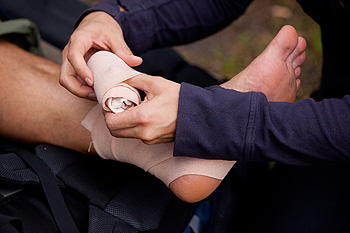
Sports related injuries are commonly treated using the RICE method. This includes rest, applying ice to the injured area, compression and elevating the ankle. More serious sprains and injuries may require surgery, which could include arthroscopic and reconstructive surgery. Rehabilitation and therapy may also be required in order to get any recovering athlete to become fully functional again. Any unusual aches and pains an athlete sustains must be evaluated by a licensed, reputable medical professional.

If you have any questions please feel free to contact our office located in Thousand Oaks, CA . We offer the newest diagnostic and treatment technologies for all your foot and ankle needs.
Read more about Sports Related Foot And Ankle Injuries

Arthritis Can Cause Pain in the Feet and Ankles

If you are suffering from tenderness, pain, or stiffness in the joints of your feet or ankles, call us to schedule an appointment.

Why Do Heel Spurs Occur?

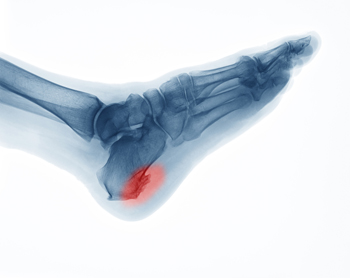
Heel spurs can occur when foot muscles and ligaments are strained, the plantar fascia is overly stretched, or the membrane covering the heel is repeatedly torn. In response to this trauma, the body sends calcium to protect and strengthen the area, which can build up over a period of time and cause bony projections on the bottom of the heel bone towards the arch, at the back of the heel, or beneath the arch. While some heel spurs go undetected, many people experience tenderness and pain in the heel, especially when walking barefoot on surfaces that are hard. If you have heel pain, a podiatrist can examine you and use X-rays to help determine if a heel spur is present, and prescribe treatments such as orthotics, exercise, injections, or even surgery to provide relief.

Heel spurs can be incredibly painful and sometimes may make you unable to participate in physical activities. To get medical care for your heel spurs, contact one of our podiatrists from Advanced Foot & Ankle Medical Center . Our doctors will do everything possible to treat your condition.

Heels Spurs

Heel spurs are formed by calcium deposits on the back of the foot where the heel is. This can also be caused by small fragments of bone breaking off one section of the foot, attaching onto the back of the foot. Heel spurs can also be bone growth on the back of the foot and may grow in the direction of the arch of the foot.

Older individuals usually suffer from heel spurs and pain sometimes intensifies with age. One of the main condition's spurs are related to is plantar fasciitis.

Pain

The pain associated with spurs is often because of weight placed on the feet. When someone is walking, their entire weight is concentrated on the feet. Bone spurs then have the tendency to affect other bones and tissues around the foot. As the pain continues, the feet will become tender and sensitive over time.

Treatments

There are many ways to treat heel spurs. If one is suffering from heel spurs in conjunction with pain, there are several methods for healing. Medication, surgery, and herbal care are some options.

If you have any questions feel free to contact our office located in Thousand Oaks, CA . We offer the latest in diagnostic and treatment technology to meet your needs.

Read more about Heel Spurs

Tips for Foot Care During Pregnancy

The additional weight of carrying a baby can often lead to a variety of foot related conditions for pregnant women. One of the most common occurrences in pregnant women is painful and swollen feet that result from excess fluids. In order to reduce this swelling it is important to raise the feet as often as possible, along with wearing wide and comfortable shoes and not crossing the legs. Pregnancy can also lead to pain in the arch of the foot. Stretching in the morning, as well as before and after exercise can help ease this pain. Supportive low-heeled shoes can also help the arch of the foot. Ingrown toenails can also occur due to the feet swelling. Wearing wider shoes can help prevent ingrown toenails too, but should one develop it is important to be seen and treated by a podiatrist. If you are pregnant and struggling with foot related issues, consulting with a podiatrist can be beneficial to learn various tips and tricks. 

Pregnant women with swollen feet can be treated with a variety of different methods that are readily available. For more information about other cures for swollen feet during pregnancy, consult with one of our podiatrists from Advanced Foot & Ankle Medical Center . Our doctors will attend to all of your foot and ankle needs.

What Foot Problems Can Arise During Pregnancy?

One problem that can occur is overpronation, which occurs when the arch of the foot flattens and tends to roll inward.  This can cause pain and discomfort in your heels while you’re walking or even just standing up, trying to support your baby.  

Another problem is edema, or swelling in the extremities. This often affects the feet during pregnancy but tends to occur in the later stages. 

How Can I Keep My Feet Healthy During Pregnancy?

  • Wearing orthotics can provide extra support for the feet and help distribute weight evenly
  • Minimize the amount of time spent walking barefoot
  • Wear shoes with good arch support
  • Wear shoes that allow for good circulation to the feet
  • Elevate feet if you experience swelling
  • Massage your feet
  • Get regular, light exercise, such as walking, to promote blood circulation to the feet

If you have any questions please feel free to contact our office located in Thousand Oaks, CA . We offer the newest diagnostic and treatment technologies for all your foot and ankle needs.

Read more about Pregnancy and Foot Health

Why Does My Heel Hurt?

The heel is a fatty cushion on the back of the foot that provides padding. Obesity, improperly fitting shoes, injuries and running and jumping on hard surfaces can all lead to heel pain issues. One of the most common causes of heel pain is plantar fasciitis. Plantar fasciitis occurs when the plantar fascia, the band of tissue along the bottom of the foot that connects the heel to the toes, becomes inflamed. Plantar fasciitis is often associated with a heel spur as well. When the plantar fascia tears near the heel, it can bleed and then calcify. These calcium deposits form heel spurs, which can only be detected through an X-ray. If you are struggling with heel pain, please consult with a podiatrist for a proper diagnosis and treatment.

Many people suffer from bouts of heel pain. For more information, contact one of our podiatrists of Advanced Foot & Ankle Medical Center . Our doctors can provide the care you need to keep you pain-free and on your feet.

Causes of Heel Pain

Heel pain is often associated with plantar fasciitis. The plantar fascia is a band of tissues that extends along the bottom of the foot. A rip or tear in this ligament can cause inflammation of the tissue.

Achilles tendonitis is another cause of heel pain. Inflammation of the Achilles tendon will cause pain from fractures and muscle tearing. Lack of flexibility is also another symptom.

Heel spurs are another cause of pain. When the tissues of the plantar fascia undergo a great deal of stress, it can lead to ligament separation from the heel bone, causing heel spurs.

Why Might Heel Pain Occur?

  • Wearing ill-fitting shoes                  
  • Wearing non-supportive shoes
  • Weight change           
  • Excessive running

Treatments

Heel pain should be treated as soon as possible for immediate results. Keeping your feet in a stress-free environment will help. If you suffer from Achilles tendonitis or plantar fasciitis, applying ice will reduce the swelling. Stretching before an exercise like running will help the muscles. Using all these tips will help make heel pain a condition of the past.

If you have any questions please contact our office located in Thousand Oaks, CA . We offer the newest diagnostic and treatment technologies for all your foot and ankle needs.

Read more about Heel Pain

How Podiatrists Treat Broken Ankles

The ankle is the joint where the tibia (shin bone), the fibia (back bone on the lower leg), and the tallus (which connects to the heel bone) all come together.  A broken bone in this area can range from a hairline fracture to a shattering of the bone, and the symptoms may vary depending on the type of break.  Common symptoms are pain, swelling, and the inability to put weight on the ankle.  Because broken ankles are very serious and can be easily mistaken for an ankle sprain, patients who are experiencing severe ankle pain should visit a podiatrist.  A podiatrist will examine the ankle and use diagnostic imaging to determine what bones may be out of place.  Severe fractures will usually require a cast or brace in order to allow the ankle to heel.  However, some severe breaks with bones out of alignment will require surgery.  After the initial treatment, your podiatrist will be able to guide you in your recovery.

Broken ankles need immediate treatment. If you are seeking treatment, contact one of our podiatrists from Advanced Foot & Ankle Medical Center . Our doctors can provide the care you need to keep you pain-free and on your feet. 

Broken Ankles
A broken ankle is experienced when a person fractures their tibia or fibula in the lower leg and ankle area. Both of these bones are attached at the bottom of the leg and combine to form what we know to be our ankle.

When a physician is referring to a break of the ankle, he or she is usually referring to a break in the area where the tibia and fibula are joined to create our ankle joint. Ankles are more prone to fractures because the ankle is an area that suffers a lot of pressure and stress. There are some obvious signs when a person experiences a fractured ankle, and the following symptoms may be present.

Symptoms of a Fractured Ankle

  • Excessive pain when the area is touched or when any pressure is placed on the ankle
  •  Swelling around the area
  •  Bruising of the area
  • Area appears to be deformed

If you suspect an ankle fracture, it is recommended to seek treatment as soon as possible. The sooner you have your podiatrist diagnose the fracture, the quicker you’ll be on the way towards recovery.

If you have any questions, please feel free to contact our office located in Thousand Oaks, CA . We offer the newest diagnostic and treatment technologies for all your foot care needs.

Read more about All About Broken Ankles

Gout Pain Can Be Managed

Gout is a painful, inflammatory form of arthritis. Those affected will typically feel an intense stiffness in the joints of their feet, particularly in the big toe. Schedule a visit to learn about how gout can be managed and treated.

Symptoms of Rheumatoid Arthritis in the Lower Limbs

Rheumatoid arthritis (RA) is an autoimmune condition that can cause swelling, pain, stiffness, and a reduced range of motion in any joint in the body. RA often affects the small joints of the feet and the ankle joint. In the front of the foot, the big toe joint is often affected. This can lead to difficulty walking, as the big toe joint bears the body’s weight. In the back of the foot, the three joints responsible for side to side movements of the foot can be affected and can make walking on any uneven surface very difficult. When the ankle is affected, the ability to climb stairs or ramps may be impaired. RA can also cause rheumatoid nodules to form on the feet, which can painfully rub against the shoes while walking. If you have RA in your feet or ankles, it is suggested that you are under the care of a podiatrist who can help you manage this condition.

Because RA affects more than just your joints, including the joints in your feet and ankles, it is important to seek early diagnosis from your podiatrist if you feel like the pain in your feet might be caused by RA. For more information, contact one of our podiatrists of Advanced Foot & Ankle Medical Center . Our doctors will assist you with all of your podiatric concerns.

What Is Rheumatoid Arthritis?

Rheumatoid Arthritis (RA) is an autoimmune disorder in which the body’s own immune system attacks the membranes surrounding the joints. Inflammation of the lining and eventually the destruction of the joint’s cartilage and bone occur, causing severe pain and immobility.

Rheumatoid Arthritis of the Feet

Although RA usually attacks multiple bones and joints throughout the entire body, almost 90 percent of cases result in pain in the foot or ankle area.

Symptoms

  • Swelling and pain in the feet
  • Stiffness in the feet
  • Pain on the ball or sole of feet
  • Joint shift and deformation

Diagnosis

Quick diagnosis of RA in the feet is important so that the podiatrist can treat the area effectively. Your doctor will ask you about your medical history, occupation, and lifestyle to determine the origin of the condition. Rheumatoid Factor tests help to determine if someone is affected by the disease.

If you have any questions please feel free to contact our office located in Thousand Oaks, CA . We offer the newest diagnostic and treatment technologies for all your foot and ankle needs.

Read more about Rheumatoid Arthritis in the Feet

What Happens During an Ankle Sprain

The ligaments in the ankle connect the bones to each other and provide stability to the ankle. When these ligaments are torn or stretched due to an accidental twist or roll of the ankle, a sprain can occur. Ankle sprains are some of the most common injuries that occur in sports that require quick changes in direction such as soccer, football, and basketball. Athletes who have had an ankle sprain before are at a higher risk for developing them again. Patients who believe they may have an ankle sprain should consult with a podiatrist. A podiatrist will examine the ankle and take X-rays to make sure that it is not broken. While most ankle sprains are treated with anti-inflammatory medications, ice, and supportive devices, a podiatrist will be able to determine the right treatment for you.

Ankle sprains are common but need immediate attention. If you need your feet checked, contact one of our podiatrists from Advanced Foot & Ankle Medical Center . Our doctors can provide the care you need to keep you pain-free and on your feet.

How Does an Ankle Sprain Occur?

Ankle sprains take place when the ligaments in your ankle are torn or stretched beyond their limits. There are multiple ways that the ankle can become injured, including twisting or rolling over onto your ankle, putting undue stress on it, or causing trauma to the ankle itself.

What Are the Symptoms?

  • Mild to moderate bruising
  • Limited mobility
  • Swelling
  • Discoloration of the skin (depending on severity)

Preventing a Sprain

  • Wearing appropriate shoes for the occasion
  • Stretching before exercises and sports
  • Knowing your limits

Treatment of a Sprain

Treatment of a sprain depends on the severity.  Many times, people are told to rest and remain off their feet completely, while others are given an air cast. If the sprain is very severe, surgery may be required.

If you have suffered an ankle sprain previously, you may want to consider additional support such as a brace and regular exercises to strengthen the ankle.

If you have any questions please feel free to contact our office located in Thousand Oaks, CA . We offer the newest diagnostic and treatment technologies for all your foot and ankle needs.

Read more about Ankle Sprains

Connect With Us

scroll-to-top