Tips for Managing Arthritis in the Feet

Tips for Managing Arthritis in the Feet

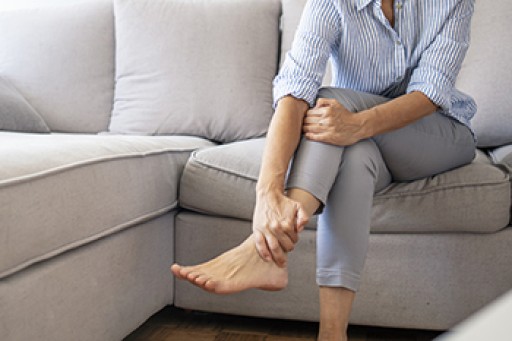
If you suffer from arthritis, you should know that you might be at an especially high risk of experiencing complications in your feet. For example, you may experience swelling and redness in the joints of your feet or you may even have severe pain when moving your feet. There are several things you can do by yourself at home to help manage the effects of arthritis and your feet. First, to treat swelling, you might consider applying an ice pack to the affected area of the feet. You might apply the ice for ten minutes, always being sure to use a towel to separate the pack from making direct contact with the skin. If your arthritis is making you experience plantar fasciitis in your feet, you might also consider rolling your feet over a water bottle. To do this, get a cold water bottle and roll the bottom of each foot back and forth over the bottle while sitting down. If you have arthritis, it is important to contact a podiatrist who can help you manage your condition. 

Arthritis can be a difficult condition to live with. If you are seeking treatment, contact one of our podiatrists from Advanced Foot & Ankle Medical Center . Our doctors can provide the care you need to keep you pain-free and on your feet.

Arthritic Foot Care  

Arthritis is a joint disorder that involves the inflammation of different joints in your body, such as those in your feet. Arthritis is often caused by a degenerative joint disease and causes mild to severe pain in all affected areas. In addition to this, swelling and stiffness in the affected joints can also be a common symptom of arthritis.

In many cases, wearing ill-fitting shoes can worsen the effects and pain of arthritis. Wearing shoes that have a lower heel and extra room can help your feet feel more comfortable. In cases of rheumatoid arthritis, the arch in your foot may become problematic. Buying shoes with proper arch support that contour to your feet can help immensely.

Alleviating Arthritic Pain

  • Exercises that stretch the foot can prevent further pain and injury and increase mobility
  • Most of the pain can be alleviated with anti-inflammatory drugs, heat, and topical medications
  • Massages can help temporarily alleviate pain.

It is best to see your doctor for the treatment that is right for your needs and symptoms. Conditions vary, and a podiatrist can help you determine the right method of care for your feet.

If you have any questions, please feel free to contact our office located in Thousand Oaks, CA . We offer the newest diagnostic tools and technology to treat your foot and ankle needs.


Read more about How to Care for Your Arthritic Foot

Different Shoes for Various Styles of Running

Different Shoes for Various Styles of Running

There are several reasons why people choose to run. These include losing weight, training for a marathon, or jogging for pure enjoyment. There are different types of shoes for various styles of running, and it is beneficial to choose the type of shoe that fits comfortably, while enhancing the type of running that is desired. There are many factors that can determine what kind of shoes are purchased. These consist of weight, what type of surfaces are run on, and foot structure. Research has shown foot conditions may be avoided when properly fitting running shoes are worn. These include plantar fasciitis, ankle sprains, and general aches and pains in the foot and arch area. When the right shoes are worn, they are typically comfortable, and feel like they are part of the foot. Many people who enjoy running prefer to shop at a specialty store where they can get advice in matching their foot type to the appropriate shoe. There are different shoes that target a forefoot or heel striker, and it is important to know what type of running is done. If you would like additional information about how to purchase the correct running shoe, please confer with a podiatrist who can answer any questions you may have.

If you are a runner, wearing the right running shoe is essential. For more information, contact one of our podiatrists from Advanced Foot & Ankle Medical Center . Our doctors can provide the care you need to keep you pain-free and on your feet.

Choosing the Right Running Shoe for Your Foot Type

To increase performance and avoid the risk of injury, it is important to choose the right running shoe based on your foot type. The general design of running shoes revolves around pronation, which is how the ankle rolls from outside to inside when the foot strikes the ground.

  • Neutral runners are able to choose from a wide variety of shoes, including minimalist shoes or even going barefoot.
  • Runners who overpronate, or experience an over-abundance of ankle rolling, should choose shoes that provide extra motion control and stability.
  • Runners who underpronate, or supinate, have feet that have high arches and lack flexibility, preventing shock absorption. They require shoes with more flexibility and cushion.

If you have any questions please feel free to contact our office located in Thousand Oaks, CA . We offer the newest diagnostic and treatment technologies for all your foot and ankle needs.

Read more about Choosing the Right Running Shoe for Your Foot Type

Choosing the Right Running Shoe for Your Foot Type

Running may seem like a simple to do. However, running is actually a complex movement that puts stress on the ligaments, bones, and joints of the body.  Selecting the correct running shoe is important for increasing performance and avoiding risk of injury.  Running shoes should be selected based on your foot type.  Considerations such as trail versus road shoes are important. Your foot type dictates the degree of cushioning, stability and motion control you require.  The most accurate way to learn your foot type is to visit a local shop that specializes in running shoes.  Professionals can measure your arch type, stride and gait and help you with your shoe needs.

The design of running shoes is created around the idea of pronation.  Pronation is the natural rolling movement of your ankle from the outside to inside when your foot strikes the ground.  If you run properly you strike the ground on the outside of your heel and roll in the direction of your big toe before pushing off once more.  Pronation is beneficial because it assists the lower half of your body in absorbing shock and storing energy.  Those considered neutral runners pronate correctly and do not need running shoes that help correct their form.  Neutral runners can choose from a wide variety of shoes, including barefoot or minimal types.  However, those who have arch problems or who adopt an incorrect form while running may experience too much or too little pronation. They may require running shoes that offer additional support.

Those who overpronate experience an over-abundance of ankle rolling.  Even while standing, those who severely overpronate display ankles that are angled inward.  It is not uncommon for them to have flat feet or curved legs.  The tendency to overpronate may cause many injuries.  Areas that tend to become injured are the knees, ankles, and Achilles tendon.  If you find that you have a tendency to overpronate, you should look at shoes that provide extra stability and motion-control.  Motion-control shoes are straight and firm. Shoes of this type do not curve at the tip.  The restricted flexibility along the middle of the shoe prohibits the foot from rolling too far inward as your foot strikes the ground.

A less common problem is underpronation.  Underpronation, also called supination, is when the feet are unable to roll inward during landing.  Those who underpronate have feet that lack flexibility and high arches.  This prevents any kind of shock absorption, even though it does place less rotational stress on ankles and knees.  This added force can cause fractures, ligament tears, and muscle strains because the legs are trying to compensate for the impact.  Those who underpronate need shoes with more cushioning and flexibility.  If you have a tendency to underpronate, selecting stability or motion-control shoes may cause you more problems by continuing to prevent pronation.

Reminder: When Was the Last Time...?

Reminder: When Was the Last Time...?

Custom orthotics, or shoe inserts, should be periodically replaced. Orthotics must fit properly to give you the best results. Protect your feet and ankles!

Stress Fractures of the Foot and Ankle

Stress Fractures of the Foot and Ankle

Our bones are important aspects of our body and they are constantly changing. The heavier the workload for a bone, the more likely it is that calcium will be placed in it. When a bone isn’t used often, there won’t be much calcium within it. When stress from repetitive loads prevent the bone from being able to repair itself, cracks will start to form. Stress fractures are defined as cracks in a bone that result from repetitive force, such as overuse.

The most common cause of stress fractures is a sudden increase in intensity and duration of physical activity. For example, if you begin to run long distances without working your way into doing so, you will be more likely to develop a stress fracture.

Common symptoms of stress fractures are pain and swelling near the weight bearing area on the injured bone. When initial x-rays are performed, it is possible that the fracture will not show up. However, once the stress on the area continues, the damage will increase, and the fracture will be severe enough to show up on an x-ray. Certain parts of the foot are more likely to develop stress fractures than others. Areas that typically have these fractures are: the metatarsals, the navicular bone, the calcaneus, tibia, and fibula.

Since women are at an increased risk of developing osteoporosis, they are twice as likely as men to sustain a stress fracture. Additionally, old age causes a decrease in bone mineral density which is why elderly people are also likely to develop these fractures.

It is important for you to be professionally diagnosed by a podiatrist if you suspect you have a stress fracture, because there are other injuries that can easily be mistaken for a fracture.  Sprains, strains, shin splints, plantar fasciitis, and Morton’s neuroma can all easily be mistaken for stress fractures in the foot. Your podiatrist will likely ask you a series of questions to determine what type of pain you are experiencing. These questions will help your doctor identify whether you have a stress fracture.

The best method of treatment for a stress fracture is rest. Additionally, a walking boot, cast, or crutches, will help rest the area that is injured. The typical healing time for stress fractures is 4-12 weeks, however this depends on which bone is involved.

Signs of Possible Stress Fractures

Signs of Possible Stress Fractures

Stress fractures of the feet are particularly tricky to recognize. They are hairline cracks in the bones, frequently the long metatarsal bones in the midfoot and the calcaneus bone in the heel. They are considered repetitive injuries and that means the more you repeat an activity, the worse they become. But it can take a while before you even notice the problem. Signs that may help to identify a stress fracture include a deep ache in the foot, a dull pain midway into the activity that fades when you rest, and a pain that just doesn’t go away. Other hints are pain that occurs even when you are not active, pain that worsens at night, and pain that begins about a week after increasing your activity level. Treatment for stress fractures may take weeks or even months. As soon as you recognize that something is wrong, it is a good idea to stop the activity causing the pain and make an appointment with a podiatrist for a full examination.

Stress fractures occur when there is a tiny crack within a bone. To learn more, contact one of our podiatrists from Advanced Foot & Ankle Medical Center . Our doctors can provide the care you need to keep you pain free and on your feet.

How Are They Caused?

Stress fractures are the result of repetitive force being placed on the bone. Since the lower leg and feet often carry most of the body’s weight, stress fractures are likely to occur in these areas. If you rush into a new exercise, you are more likely to develop a stress fracture since you are starting too much, too soon.  Pain resulting from stress fractures may go unnoticed at first, however it may start to worsen over time.

Risk Factors

  • Gender – They are more commonly found in women compared to men.
  • Foot Problems – People with unusual arches in their feet are more likely to develop stress fractures.
  • Certain Sports – Dancers, gymnasts, tennis players, runners, and basketball players are more likely to develop stress fractures.
  • Lack of Nutrients – A lack of vitamin D and calcium may weaken the bones and make you more prone to stress fractures
  • Weak Bones – Osteoporosis can weaken the bones therefore resulting in stress fractures

Stress fractures do not always heal properly, so it is important that you seek help from a podiatrist if you suspect you may have one. Ignoring your stress fracture may cause it to worsen, and you may develop chronic pain as well as additional fractures.

If you have any questions, please feel free to contact our office located in Thousand Oaks, CA . We offer the newest diagnostic and treatment technologies for all your foot care needs.

Read more about Stress Fractures of the Foot and Ankle

The Timeframe for Toenail Fungus to Heal

The Timeframe for Toenail Fungus to Heal

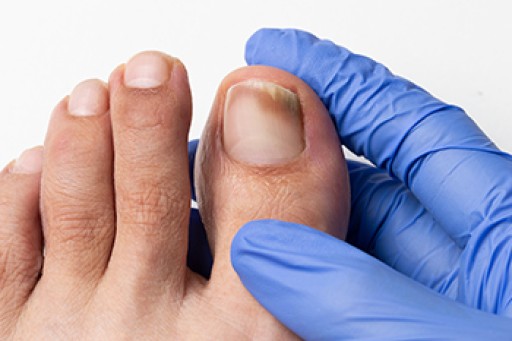
Toenail fungus is a noticeable foot condition. A toenail that is dark and thick can be caused by a fungus that is known as dermatophytes. The nail can change shape, and the color may differ as a result of the area which is affected underneath the nail. Many times, the nail on the big toe is the first to start developing toenail fungus, and in severe cases, it may travel to other nails. There may be existing medical conditions that can lead to toenail fungus. These can include diabetes, problems with circulation, or a weakened immune system. If this condition is not treated promptly, the nails may begin to crumble, and the fungus may grow under the nail, and possibly ooze. Effective treatment may take months to completely heal the fungus, and it is important to stay consistent with applying creams, and taking medication. A podiatrist can properly diagnose and treat this condition, and it is suggested that you schedule an appointment as soon as possible so the proper treatment can begin.

For more information about treatment, contact one of our podiatrists of Advanced Foot & Ankle Medical Center . Our doctors can provide the care you need to keep you pain-free and on your feet.

Toenail Fungus Treatment

Toenail fungus is a condition that affects many people and can be especially hard to get rid of. Fortunately, there are several methods to go about treating and avoiding it.

Antifungals & Deterrence

Oral antifungal medicine has been shown to be effective in many cases. It is important to consult with a podiatrist to determine the proper regiment for you, or potentially explore other options.

Applying foot powder on the feet and shoes helps keep the feet free of moisture and sweat.

Sandals or open toed shoes – Wearing these will allow air movement and help keep feet dry. They also expose your feet to light, which fungus cannot tolerate. Socks with moisture wicking material also help as well.

If you have any questions please feel free to contact our office located in Thousand Oaks, CA . We offer the newest diagnostic tools and technology to treat your foot and ankle needs.

Read more about How to Treat Your Toenail Fungus

How to Treat Your Toenail Fungus

While not a serious issue, toenail fungus, or onychomycosis, can be an embarrassing and uncomfortable condition to experience. Toenail fungus is often caused from public areas that harbor fungi and improper cleaning/drying of the foot. Once infected, the fungus grows deeper into the nail and can be very hard to get rid of.

There are different types of fungus that cause toenail fungus. Dermatophytes, yeasts, and molds are the most frequent forms of fungus to infect the toenail. Dermatophytes are the most common among the three. Symptoms associated with fungal nails include the discoloration of the toenail, brittleness, and in some circumstances, a smell. Pain is rarely a symptom caused by toenail fungus.

Diagnosis of fungal nails is generally a rather quick process. However podiatrists will make sure that the cause is not another condition such as lichen planus, psoriasis, onychogryphosis, or nail damage. Podiatrists will make use of fungal cultures and microscopy to verify that it is fungus.

While over-the-counter ointments are readily available, most are ineffective. This is due to the fact that the nail is very protective and that the fungus slips in between the nail plate and bed. Podiatrists can offer oral medication which currently provides the best results.

Ultimately, prevention is the best line of defense against toenail fungus. Avoid unsanitary public showers. If you do use a public shower, use shower shoes to provide your foot with protection. Once you are finished showering, make sure to thoroughly dry your feet. Fungi thrive in warm, dark, and moist places like sweaty, warm feet that are left dark in shoes all day.

Falls Prevention

Falls Prevention

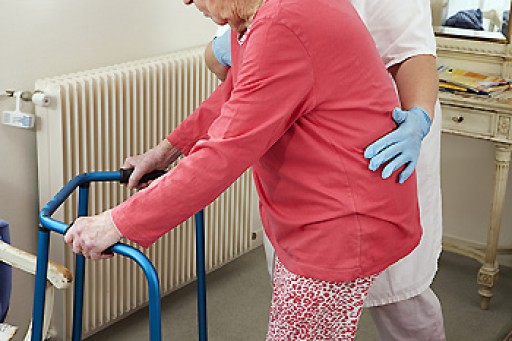
Elderly Americans are very susceptible to falls as they get older. Everyone experiences decreases in flexibility, balance, strength, and the senses as they age. This correlates to some eye-opening statistics. 1 in 4 Americans aged 65 and older fall each year. An elderly American is being treated for a fall in an emergency room every 11 seconds. In light of these striking statistics, one can see the importance of taking steps to prevent falls.

Finding an exercise program for the elderly is an excellent way to reduce the likelihood of falls. Look for an exercise program that improves strength and balance. Elderly people who live a more sedentary lifestyle, with little physical activity, are at an increased risk of falling. Wearing well-fitted footwear that provides good foot support and cushion will help prevent falls from poorly fitted shoes. Talking to a podiatrist about your susceptibility to falls and about inspecting your prescriptions will help to avoid any medication that could make falls more likely. Due to a decline in the senses among the elderly, having your eyes and hearing checked is recommended.

Around half of all falls occur in the household. Removing tripping hazards in the home and making it more accommodating to older persons can significantly reduce falls. Some notable household changes include increasing lighting around the house, installing grab bars in the shower and bathroom, and making sure the floor is clear of clutter. Other smart options include installing a shower chair, using rubber-bottomed rugs, and placing railings on both sides of stairwells.  

Finally, discuss with a doctor and your family about your fear of falling. This will help to increase awareness among the population on the need for fall prevention. A lack of awareness on the matter, and a downplaying of importance are what increase the risks of falling. Following these tips can help to reduce the risk for yourself and your loved ones.

Simple Methods That May Help to Prevent Falling

Simple Methods That May Help to Prevent Falling

Seniors may be able to remain independent longer when fall prevention techniques are incorporated into their daily routine. These can include performing exercise programs that can help to strengthen the body as well as balancing stretches at home. Additionally, many elderly people make changes to their living environment, including removing frayed rugs and improving lighting in the household. Other effective methods to prevent falling consist of having a grab bar installed in the toilet and shower areas, and it can help to use a non-slip bath mat. It is suggested that physical and eye examinations be performed regularly, and this can help to update existing medication and eyeglass prescriptions. Falling episodes may be lessened when the correct shoes are worn and clutter in the home is cleared. Falling can impact the feet negatively so it is important to learn how to prevent a fall from occurring. If you would like more information about how to prevent falls, please consider speaking with a podiatrist.

Preventing falls among the elderly is very important. If you are older and have fallen or fear that you are prone to falling, consult with one of our podiatrists from Advanced Foot & Ankle Medical Center . Our doctors will assess your condition and provide you with quality advice and care.

Every 11 seconds, an elderly American is being treated in an emergency room for a fall related injury. Falls are the leading cause of head and hip injuries for those 65 and older. Due to decreases in strength, balance, senses, and lack of awareness, elderly persons are very susceptible to falling. Thankfully, there are a number of things older persons can do to prevent falls.

How to Prevent Falls

Some effective methods that older persons can do to prevent falls include:

  • Enrolling in strength and balance exercise program to increase balance and strength
  • Periodically having your sight and hearing checked
  • Discuss any medications you have with a doctor to see if it increases the risk of falling
  • Clearing the house of falling hazards and installing devices like grab bars and railings
  • Utilizing a walker or cane
  • Wearing shoes that provide good support and cushioning
  • Talking to family members about falling and increasing awareness

Falling can be a traumatic and embarrassing experience for elderly persons; this can make them less willing to leave the house, and less willing to talk to someone about their fears of falling. Doing such things, however, will increase the likelihood of tripping or losing one’s balance. Knowing the causes of falling and how to prevent them is the best way to mitigate the risk of serious injury.  

If you have any questions, please feel free to contact our office located in Thousand Oaks, CA . We offer the newest diagnostic and treatment technologies for all your foot care needs.

Read more about Falls Prevention

Connect With Us

scroll-to-top